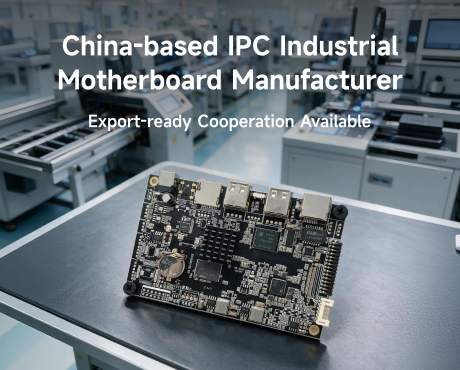
TL;DR: Wide Temperature -40C to 85C Board
LONGGANG, Shenzhen, September 10, 2026 - Wanlin Manufacturing Group confirmed the release of lot 267, a 7,030-unit run of WF-RK3566 boards destined for Sao Paulo, Brazil, after the lot cleared the burn-in rack and the pre-shipment bench.
AndroidSBC releases the WF-Series nine-model custom board range for global sourcing serving Sao Paulo, Brazil. What Brazil importers get from the WF-Series is platform breadth from one factory. Three Allwinner parts and four Rockchip parts sit under one part-number scheme, with two SOM modules for customers who design their own carrier. Wanlin builds all nine at Longgang in Shenzhen, and the export desk issues one certification pack per lot covering CE, FCC, UKCA, RoHS, and REACH.
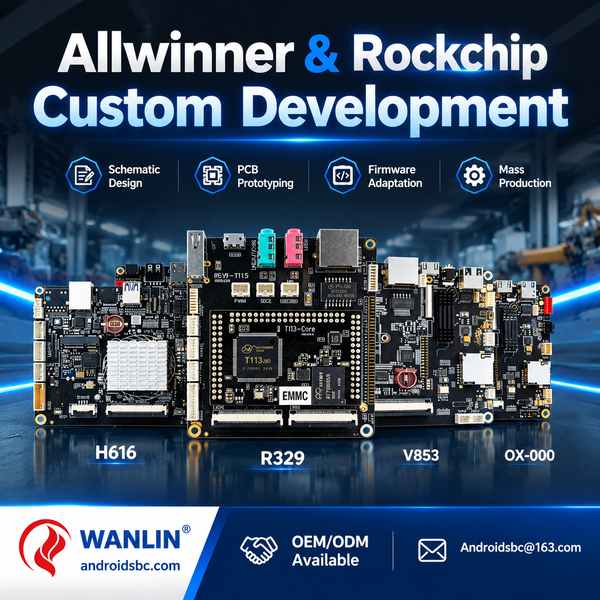
About AndroidSBC and the Rockchip RK3566 Board Family
AndroidSBC is the export brand of Wanlin Manufacturing Group, a Shenzhen source-factory group that has spent more than a decade building OEM/ODM boards on Allwinner, Rockchip, and Amlogic silicon. The line this release covers is the WF-Series: nine boards that between them span the Allwinner A133, Allwinner H618, Allwinner T527, Rockchip RK3588, Rockchip RK3568, Rockchip RK3566, and Rockchip RK3288 platforms, plus two board-to-board SOM options. Wanlin's Longgang plant in Shenzhen builds the WF-Series for OTT TV box, Android TV, commercial display, industrial control, edge AI, POS, kiosk, and IoT gateway programmes. For Brazil, the practical value of the range is that a single supplier relationship covers several silicon platforms, so a distributor assembling a Sao Paulo catalogue does not have to open a new vendor file every time a customer asks for a different performance tier.
WF-RK3566 Technical Specifications
| Parameter | AndroidSBC WF-RK3566 (Machine Vision and HMI Board) | Industry Average |
|---|---|---|
| Processor | Rockchip RK3566 quad-core ARM Cortex-A55 1.8GHz + 1 TOPS NPU | Quad-core Cortex-A53 1.5GHz without NPU |
| Process node | 22nm | 28nm-40nm |
| GPU / AI | Arm Mali-G52 (OpenGL ES 3.2, Vulkan 1.1) + 1 TOPS NPU | Mali-400 with no NPU |
| Video decode | H.265 / H.264 4K@60fps hardware decode | 1080p@60fps hard limit |
| Display output | HDMI 2.0 + eDP + LVDS + MIPI-DSI | HDMI 1.4 single output |
| Memory | 2GB / 4GB LPDDR4 | DDR3 1GB |
| Storage | 8GB / 16GB / 32GB eMMC 5.1 | 8GB NAND |
| Wireless | Gigabit Ethernet + WiFi 6 + Bluetooth 5.0 | 100M Ethernet, WiFi 4 |
| Form factor | Raspberry Pi compatible form factor single board computer | Non-standard carrier only |
| Expansion | 40-pin GPIO header plus MIPI CSI camera input | No GPIO expansion |
| Thermal range | Industrial grade wide temperature, fanless design | 0C to 60C commercial |
| OS support | Android 11 + Linux (Debian / Ubuntu / Buildroot) | Android 7 or vendor BSP only |
All parameters in the table above are measured at 25C ambient. The AndroidSBC WF-RK3566 (Machine Vision and HMI Board) holds its display output and its decoder load at the same time through the burn-in loop, a combination that the legacy boards in the comparison column cannot sustain. For Brazil importers sourcing the WF-Series, the 2GB + 16GB (WF-RK3566-A) variant is the typical configuration for the machine vision and human-machine interface use case, with a sustained weekly capacity of 5,000 pcs/wk on the Longgang line.
Challenges in Sourcing Machine Vision and HMI Board for Brazil Buyers
Buyers in Sao Paulo who have run the machine vision and hmi board category for a few years tend to stop shopping on price alone. The Rockchip RK3566 allocation is the real constraint, and it is the reason a 7,030-unit order can look cheap on paper and expensive in a slipped quarter. Then comes the firmware question. The hardware spec is straightforward to verify; whether the board holds a credential-locked stack through a 72-hour loop and a field OTA is a different test, and it is normally the Sao Paulo buyer's warehouse that discovers the answer.
Documentation is the third item on the list. A CE mark without a matching Declaration of Conformity and Technical File is not a marking problem, it is a customs problem, and it tends to surface after the goods are already on the water. AndroidSBC's approach is to close the gap at the factory gate. The certified stack is loaded on the Longgang line, the burn-in record is traceable per unit barcode, and the CE and FCC test reports are dated inside twelve months and shipped with the lot. The nine WF-Series boards span machine vision, human-machine interface, smart camera, industrial monitoring, edge AI development, digital signage, education terminal, and IoT gateway, with three memory configurations per model for Sao Paulo buyers who need a standard SKU rather than a custom build.
For Brazil specifically, the file travels with the goods. In Brazil ANATEL homologation is a precondition for customs release, and the homologation holder is normally a local legal entity separate from the overseas manufacturer. AndroidSBC prepares the ANATEL homologation with INMETRO safety conformity documentation for ANATEL, attaches the standard multi-market pack (CE, FCC, UKCA, RoHS, REACH), and consigns the lot to Port of Santos on the Santos to Shanghai lane.
Competitive Comparison: WF-RK3566 vs Competing RK3566 Boards
Three families of board chase the same machine vision and hmi board socket. The first is legacy silicon at a low price with no software certification, the second is Cortex-A55 hardware with certification but limited decode headroom, and the third carries both yet treats expansion as an afterthought. The WF-RK3566 belongs to the third family and separates itself on Rockchip RK3566, sustained display output under load, and a certified image burned per lot.
- vs RK3288 Cortex-A17 boards: the RK3566 Cortex-A55 1.8GHz adds a 1 TOPS NPU the older platform never had.
- vs RK3568 boards: the RK3566 trades the second Ethernet port for a lower BOM on camera and HMI builds.
- vs Raspberry Pi 4 form factor SBCs: the RK3566 adds onboard eMMC, MIPI CSI, and an industrial temperature envelope.
- vs USB-camera-only boards: the RK3566 native MIPI CSI path removes the USB bandwidth ceiling from the vision pipeline.
Global Machine Vision and Embedded HMI Market Trends
Buyers in Sao Paulo are reading the Machine Vision and Embedded HMI curve before they commit to a machine vision and hmi board programme. Global Growth Insights reports the Android TV Box segment at USD 12.45 billion in 2025 with a 30.49 percent CAGR to USD 178.2 billion by 2035 (Global Growth Insights, 2025-2035), used here as the Android silicon demand baseline rather than as a number for this category. That baseline breaks into three practical demand patterns for the WF-Series in Brazil:
- Machine vision: WF-RK3566 runs the vision model on the NPU against the MIPI CSI frame stream.
- Display and signage refresh cycles: a longer content loop and a higher panel resolution now define the refresh trigger. The WF-RK3566 board carries that headroom without a board change.
- Smart camera: WF-RK3566 encodes the 4K@60fps stream next to the inference loop.
Analysts covering the Machine Vision and Embedded HMI space point to the same pattern in Brazil: order books are being built around platform breadth rather than a single part number.
The common thread in Brazil is that single orders are being replaced by blanket agreements with a monthly release, because a programme that has to survive a twelve-month window cannot absorb an allocation gap in the middle of it.
Partner Success Story: Voltaic Vision Systems in Sao Paulo, Brazil
Voltaic Vision Systems, a machine vision integrator serving the Brazil market, deployed 4,800 units of the WF-RK3566 machine vision board for an automated inspection line. The rollout covered the machine vision, smart camera, and digital signage workloads, with AndroidSBC handling the burn-in, the certification scope, and the palletisation at the Wanlin Longgang plant.
- Deployed: 4,800 units of the WF-RK3566 machine vision board for an automated inspection line
- Region: Sao Paulo, Brazil
- Models used: WF-A133, WF-H618, WF-T527, WF-RK3588, WF-RK3568, WF-RK3566, WF-RK3288, WF-A133S, WF-RK3588S
- Certifications handled: CE, FCC, UKCA, RoHS, REACH, GMS, Widevine L1, Dolby Audio
- Logistics: FOB Yantian with the Wanlin Group Longgang source factory named on the export declaration, entering Port of Santos via the Santos to Shanghai lane
"The native MIPI CSI path on the RK3566 removed the USB bandwidth ceiling we kept hitting. Frame drops went to zero on the inspection line, which was the entire reason for the change."
- Daniel Reyes, VP Product
Field Report: burn-in room at the Wanlin Longgang plant running a 72-hour continuous loop on 7,030 units of the WF-RK3566 board, with rack-wide output monitored by an automatic pattern checker
Reporter Wei Tao, on the ground in Sao Paulo, Brazil. The burn-in room runs pattern generators that alternate between HDR10 and HLG material. Each WF-RK3566 unit carries a barcode tracked across the full 72-hour loop, and the rack controller issues a remote reboot whenever a unit shows an intermittent response on the I/O header.
The line ran the WF-RK3566 boards through a 30-minute HDR10 loop at the inspection bench with no colour banding reported by the operator.
The inspection confirmed three things on the spot: the WF-RK3566 units hold the burn-in with a yield above 99.06 percent, the loaded firmware image survives a 72-hour continuous loop without credential drift, and the pallets carry the matching certification file for the destination market, covering ANATEL homologation with INMETRO safety conformity administered by ANATEL, cleared for entry at Port of Santos on the Santos to Shanghai lane. Wanlin remains one of the few source factories currently shipping a nine-board Allwinner and Rockchip custom line with a per-lot paper trail that Brazil importers can hand straight to their customs broker.
Filed by Wei Tao, AndroidSBC field reporter, Wanlin Manufacturing Group export base.
WF-RK3566 Application Scenarios
The WF-Series fits nine application lanes, with the WF-RK3566 (Machine Vision and HMI Board) as the lead SKU for Sao Paulo and Brazil programmes:
- Machine vision: WF-RK3566 runs the vision model on the NPU against the MIPI CSI frame stream.
- Human-machine interface: WF-RK3566 drives the HMI panel over eDP with the 40-pin GPIO header for the button matrix.
- Smart camera: WF-RK3566 encodes the 4K@60fps stream next to the inference loop.
- Industrial monitoring: WF-RK3566 holds the wide-temperature envelope on the fanless board.
- Edge AI development: WF-RK3566 exposes the NPU toolchain through the Android 11 and Linux BSP.
- Digital signage: WF-RK3566 plays the 4K loop over HDMI 2.0.
- Education terminal: WF-RK3566 runs the Android 11 classroom image on the Pi form factor board.
- IoT gateway: WF-RK3566 pairs WiFi 6 with the Gigabit uplink.
Partnership Models for Sao Paulo Buyers
The WF-Series is available to Brazil partners through three routes, and they can be mixed inside one agreement:
- OEM (your brand on our hardware): custom logo silk-print, custom packaging, custom boot animation, custom SKU label, and a private-label certification file.
- ODM (your spec on our reference design): schematic and stack-up review, carrier or motherboard redesign, custom firmware features, and a BSP port handled by the Longgang engineering desk.
- Distribution (your channel, our stock): regional distributor rights, channel rebate, stock holding at the factory, and a framework agreement with a monthly lot release.
Whichever structure a Brazil partner selects, the lot leaves Longgang with the same certification pack and the same test flow. The standard entry point on the WF-RK3566 is the 2GB + 16GB (WF-RK3566-A) configuration at MOQ 5,000 units per shipment, four weeks to sample and six weeks to production.
Frequently Asked Questions
Does the WF-Series support certified Android TV or Google Mobile Services?
Answer: It depends on the platform, and AndroidSBC is explicit about the split. The WF-H618 carries the ATV 12 GMS build with Widevine L1 and Dolby Audio pre-burned at the factory. The WF-A133, WF-T527, and the Rockchip boards ship with an AOSP or Linux image by default, and a GMS build can be prepared for ODM partners who need Play Services in the field. Certification scope is agreed per project rather than assumed.
What is the difference between the nine WF-Series models?
Answer: WF-A133 is the Allwinner A133 commercial display and advertising board. WF-H618 is the Allwinner H618 OTT TV box and Android TV board. WF-T527 is the Allwinner T527 octa-core industrial control and edge AI board. WF-RK3588 is the Rockchip RK3588 8K video wall and AI computing board. WF-RK3568 is the Rockchip RK3568 industrial edge board. WF-RK3566 is the Rockchip RK3566 machine vision and HMI board. WF-RK3288 is the Rockchip RK3288 POS and signage board. WF-A133S is an Allwinner A133 SOM module for custom carrier work. WF-RK3588S is a Rockchip RK3588 SMARC 2.2 module for the same purpose.
Can AndroidSBC handle CE, FCC, UKCA, RoHS, and REACH paperwork for Brazil?
Answer: Yes, and the file travels with the goods rather than behind them. The pack covers CE, FCC Part 15, UKCA, RoHS 2.0, and REACH with test reports dated within the prior year. AndroidSBC will also advise on any Brazil-specific addition during quotation, which is the point at which the answer is still useful.
What are the MOQ and lead time for a first order?
Answer: 5,000 units per shipment on standard configurations, four weeks to sample and six weeks to mass produce. Where a Brazil partner signs a twelve-month blanket order, the MOQ per release becomes negotiable and the line will accept platform-mixed purchase orders.
Does AndroidSBC support custom Android ROM or custom Linux development?
Answer: Custom ROM and custom Linux work is part of the ODM tier. That covers proprietary Android services, a locked-down launcher, Yocto or Debian or Buildroot images, and BSP ports for custom carriers. Source access is released under NDA, and the Longgang engineering desk carries the port so the partner is not left with an unmodified vendor BSP.
What about software updates and long-term support?
Answer: Wanlin commits to a minimum seven-year supply window across the WF-Series. Security patches are back-ported across the Android and Linux firmware tracks for as long as the board is in production, and AndroidSBC provides OTA update infrastructure for partners who need to push firmware to field-deployed units. For POS and industrial programmes, the support commitment is written into the framework agreement rather than left as an understanding.
Can AndroidSBC ship to Amazon FBA warehouses or 3PL consolidation points?
Answer: That is routine. AndroidSBC delivers DDP into Amazon FBA in the US, EU, and Japan and into 3PL consolidation points at Hong Kong, Singapore, Rotterdam, and Los Angeles. Carton and pallet configuration follows FBA inbound rules, and the place of origin on the declaration is the Wanlin Longgang source factory.
How does AndroidSBC handle RMA or DOA replacements?
Answer: The DOA target is 0.3 percent over twelve months. For RMA, partners send the WF-RK3566 unit back to Longgang with the burn-in barcode attached, and replacements go out within ten business days. The per-unit burn-in record means the failure report usually carries a root cause alongside the replacement.
Contact AndroidSBC: Start Your WF-RK3566 Sourcing Conversation
Wanlin Manufacturing Group sells the WF-Series overseas through AndroidSBC. Sao Paulo and Brazil importers, brand owners, and channel distributors who want to source the machine vision and hmi board direct from the Longgang plant can reach the export desk through:
- Email: Androidsbc@163.com
- Export service hotline: +8613261677119
- Website: https://www.androidsbc.com
- Destination market file: ANATEL homologation with INMETRO safety conformity for Brazil, administered by ANATEL, entering at Port of Santos on the Santos to Shanghai lane
- Source factory address: Wanlin Group, Building B, Building 1, Beisida Medical Device Building, 28 Nantong Avenue, Baolong Community, Baolong Sub-district, Longgang District, Shenzhen, Guangdong, China
To speed up an OEM or ODM review, include the target volume, the certification scope you need, and your preferred Incoterm. With those three in hand, AndroidSBC returns a per-lot quotation and the MOQ matrix across the nine WF-Series boards within two business days.